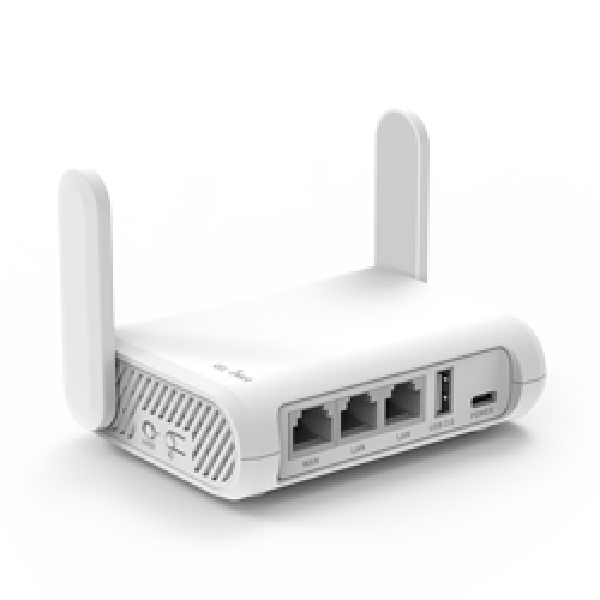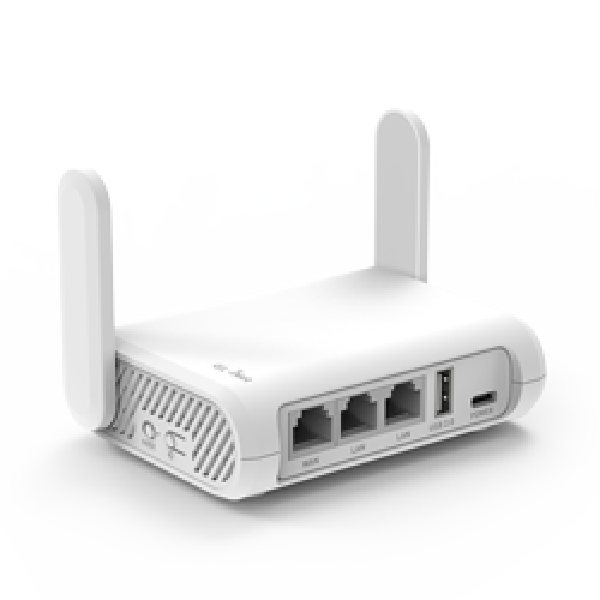
At the end of 2025 I received a GL-iNet Brume 3 (GL-MT5000) as part of a beta testing program, and it’s been quietly running in my home network ever since. I didn’t redesign my setup around it or do anything particularly fancy, I simply dropped it into the network alongside my existing gateway to see how it would behave in a real-world environment.
It’s clearly designed to sit in the background and just do its job, rather than act as the centerpiece of a network.
On paper, the specifications are surprisingly solid for something this compact. The standout feature is the combination of a reasonably capable quad-core CPU and full 2.5 GbE across all Ethernet interfaces. That alone makes it much more interesting than the typical small edge device.
| Description | Details |
|---|---|
| Interfaces | 1 x WAN Ethernet port 2 x LAN Ethernet ports 1 x USB 3.0 port 1 x Type-C power port 1 x Reset button |
| CPU | MediaTek, Quad-core @2.0GHz |
| Memory / Storage | DDR4 1GB / eMMC 8GB |
| Ethernet Speed | 10/100/1000/2500Mbps |
| Power Input | Type-C, 5V/3A |
| Power Consumption | <5W |
| Dimensions | 75 x 92 x 25mm / 148g |
In practice, that translates to a device that feels a bit more “serious” than its size suggests. The 2.5 GbE ports in particular open up some interesting placement options, whether as a dedicated VPN gateway, a segmented lab router, or simply a high-speed edge node for specific traffic.
Out of the box, it supports both OpenVPN and WireGuard, which makes it immediately useful without requiring any custom builds or deep configuration. WireGuard is where it really shines as the performance is excellent.
One of my main use cases right now is running it as a dedicated VPN gateway for a subset of my network. Instead of routing everything through a tunnel, I selectively direct certain clients and VLANs through it. That keeps the rest of the network clean while still giving me flexibility where I need it, since I also use it as a “backup” Wireguard entrypoint to my home network.
In fact, I route my rsync-to-nfs container traffic through a WireGuard tunnel handled by the Brume 3 for off-site backups. Compared to pushing the same workload through my UniFi UXG-Lite, the difference is significant and the Brume 3 simply outperforms it.
The Brume 3 is built around a MediaTek quad-core CPU running at 2.0 GHz, giving it a solid amount of headroom for encrypted traffic and sustained throughput. In contrast, the UniFi UXG-Lite uses a Qualcomm IPQ5018 with a dual-core Cortex-A53 clocked at around 1.0 GHz. While that chip is perfectly adequate for routing and light gateway duties, it sits in a lower performance class and isn’t designed for sustained high-throughput VPN workloads.
In practice, that gap becomes very noticeable with WireGuard. The Brume 3 benefits from both more cores and significantly higher clock speed, which translates into better handling of encryption and packet forwarding under load. The UXG-Lite, on the other hand, reaches its limits much sooner once real-world overhead is introduced, especially with sustained VPN traffic.
That’s ultimately why the Brume 3 performs so much better in my setup. It isn’t doing anything magical, it simply has more CPU headroom for this kind of workload.
Overall, the Brume 3 stands out most when it’s used for what it does best: VPN performance. It’s fast, consistent, and clearly built with encrypted traffic in mind, making it a strong choice for dedicated tunnels and off-site connectivity. At the same time, it’s important to recognize what it doesn’t try to be. Compared to something like the UniFi ecosystem, it lacks the slicker centralized management and the kind of unified control plane that makes managing multiple sites or devices much more streamlined. In that sense, it fits best as a focused, high-performance building block in a larger network rather than a full network management solution on its own.
Ultimately, it comes down to selecting the right tool for the job, and for high-throughput VPN workloads, that’s where the Brume 3 really stands out.
And yes, I know this comparison isn’t really fair. The UXG-Lite is not designed for this kind of VPN workloads, while the Brume 3 is. I think I might need to get my hands on a new Unifi Express 7 some time soon.